The problem
Five out of five exchange students would rather borrow temporary items than buy them—but no digital solution made borrowing both efficient and reliable.
Interviews with five exchange students at Tampere University revealed a clear preference for borrowing items they would need for only a few months. However, the available options failed to support that behaviour effectively.
University starter kits offered limited choice and raised concerns about hygiene and functionality, while WhatsApp, Telegram and Facebook groups made finding specific items slow and uncertain. Without structured search, transparent item information and mechanisms for accountability, borrowing from other students remained less convenient and trustworthy than it needed to be.
Explore the research
The solution
UniBorrow turns informal student sharing into a searchable and accountable borrowing experience.
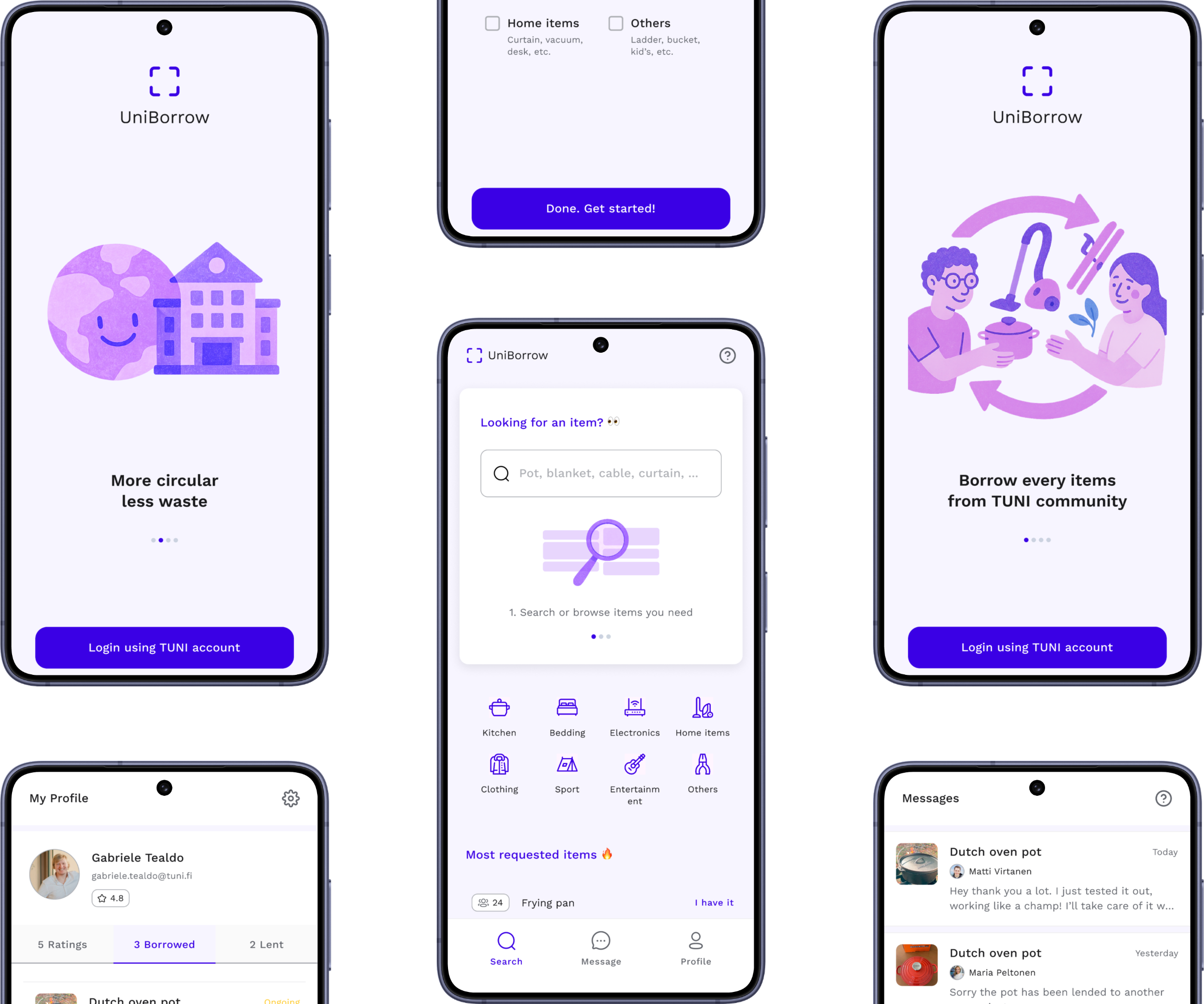
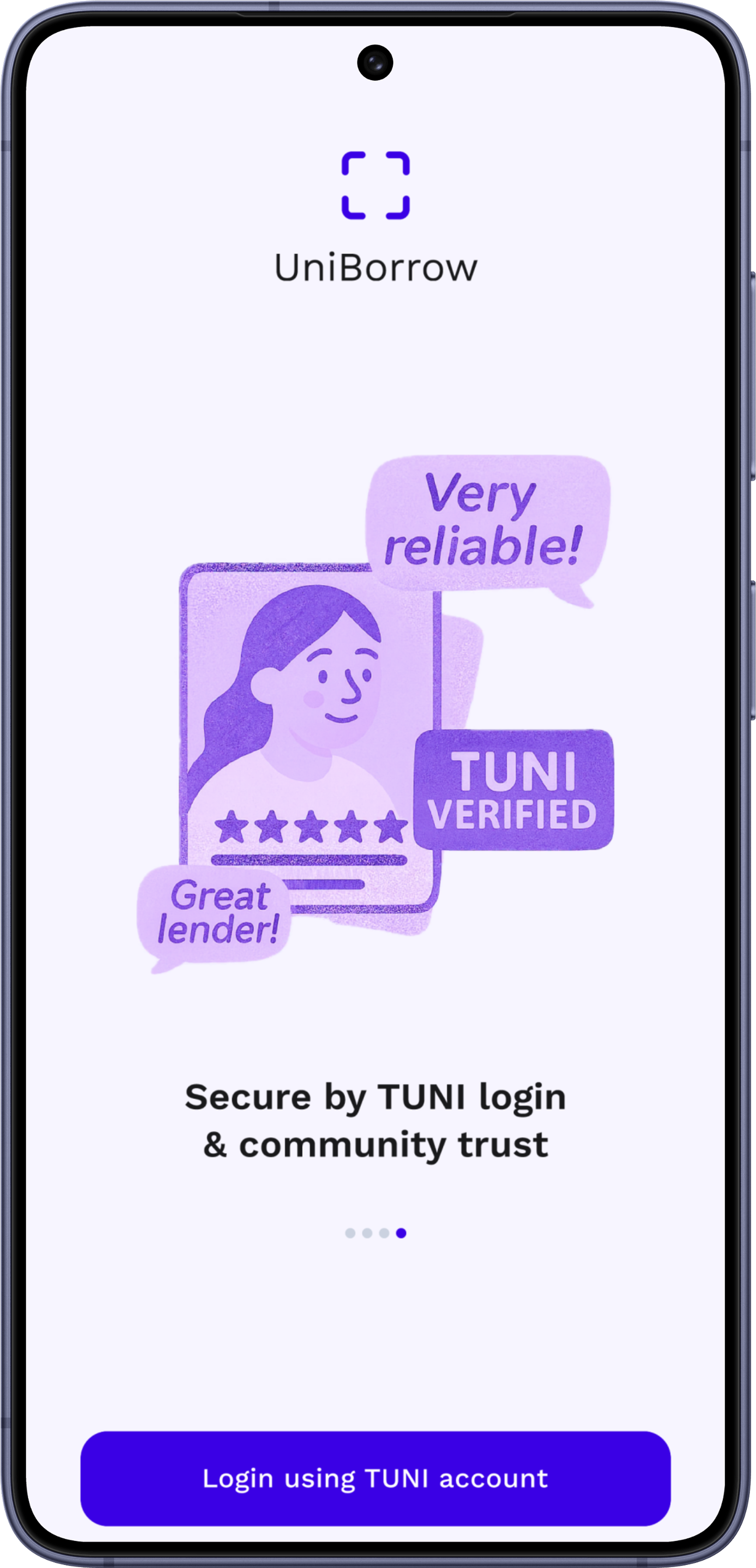
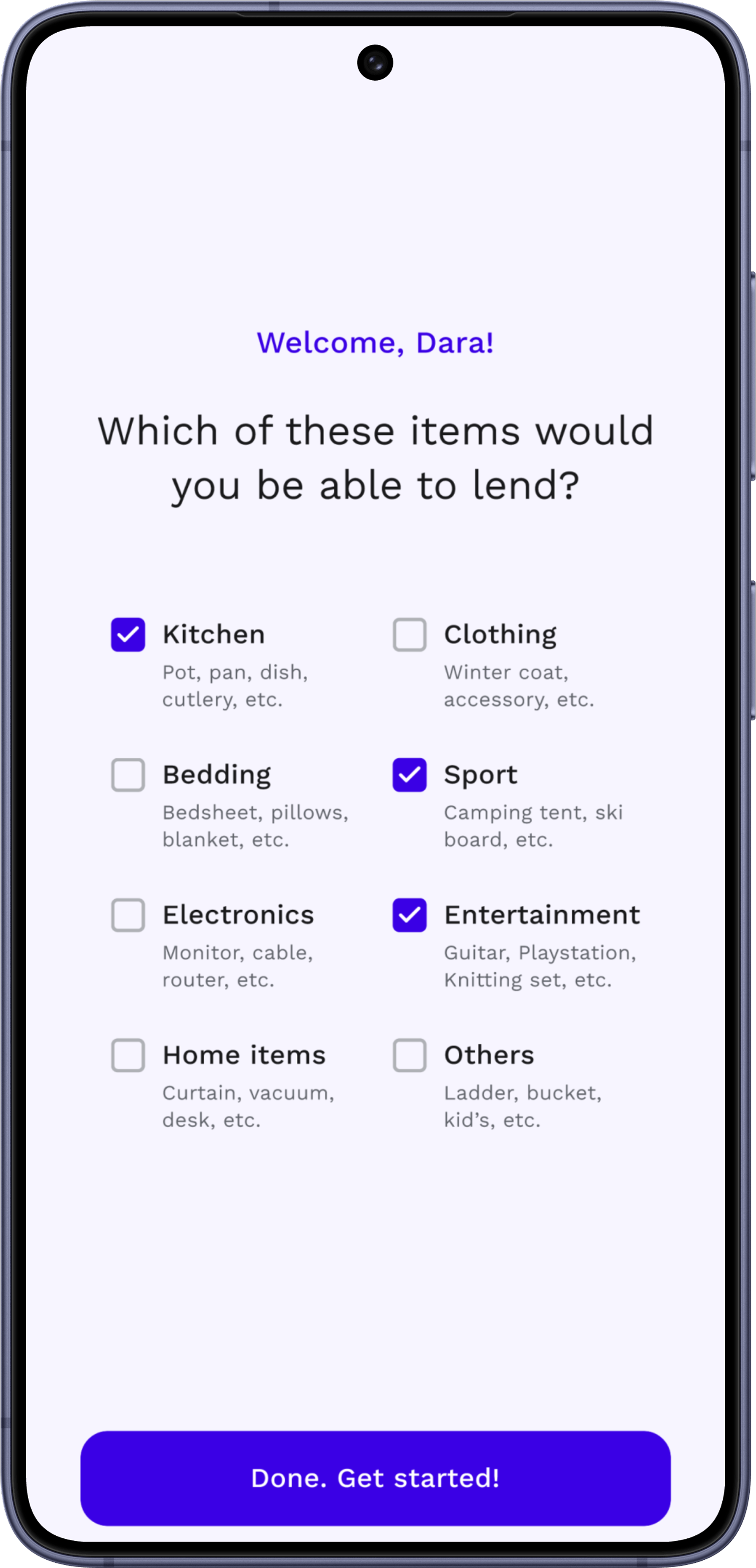
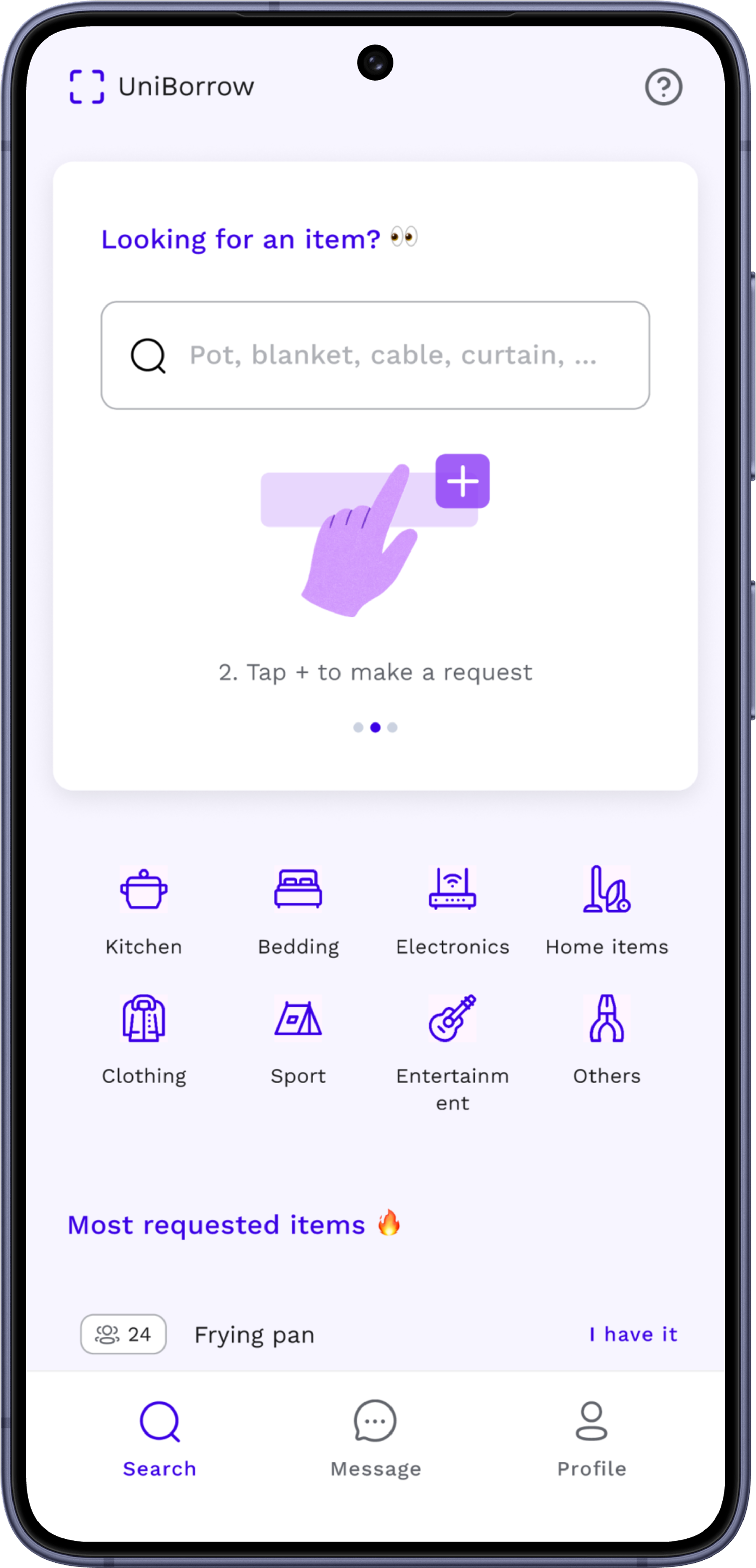
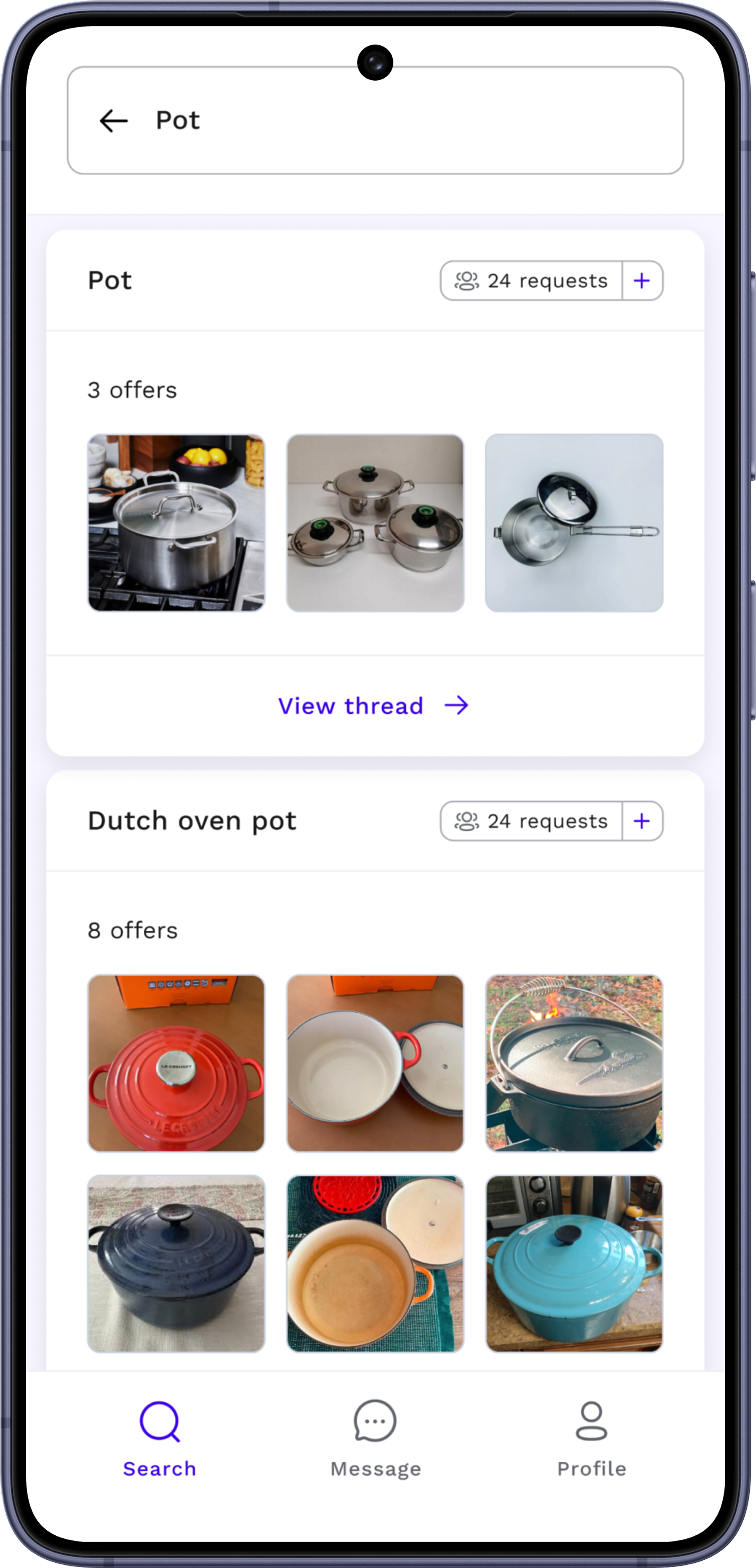
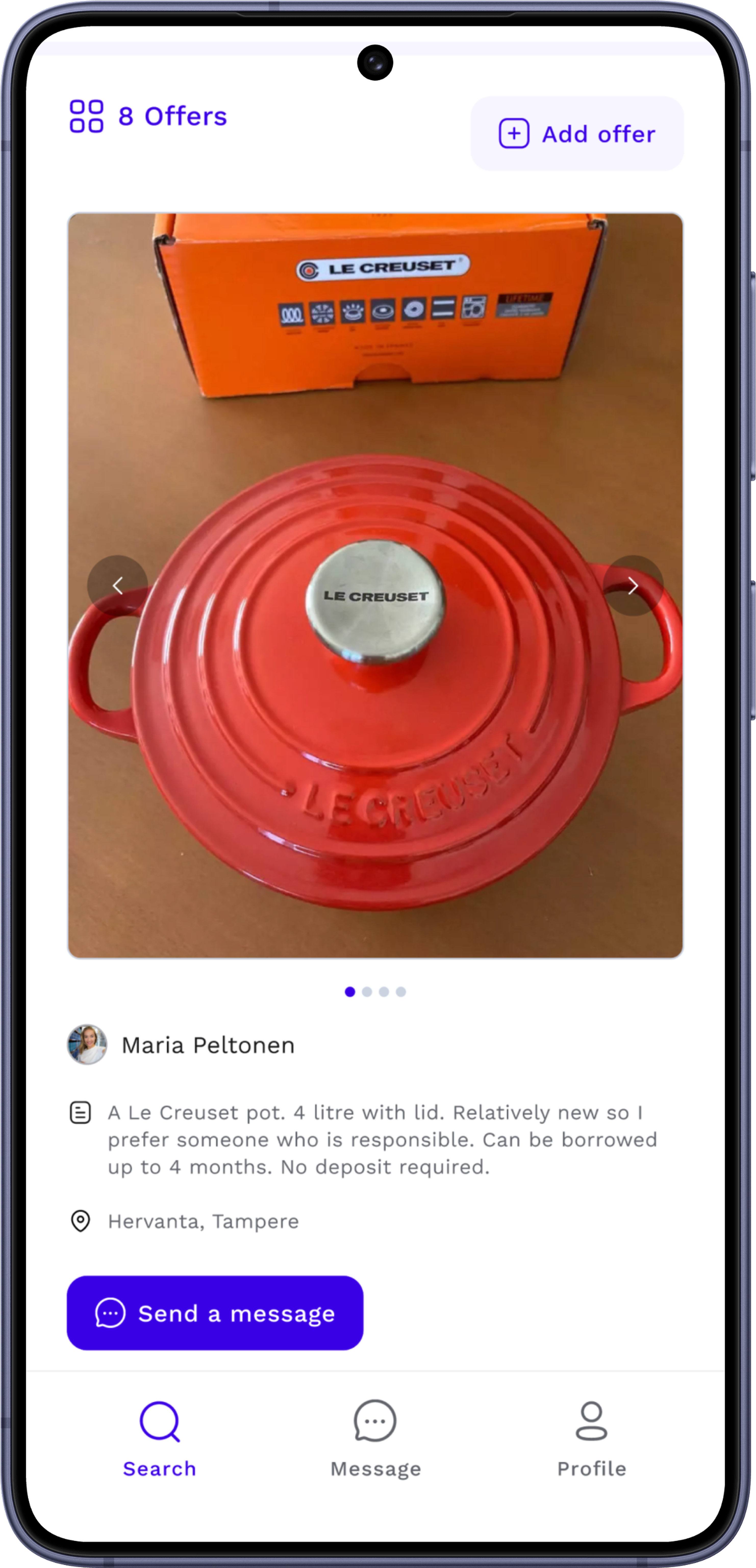
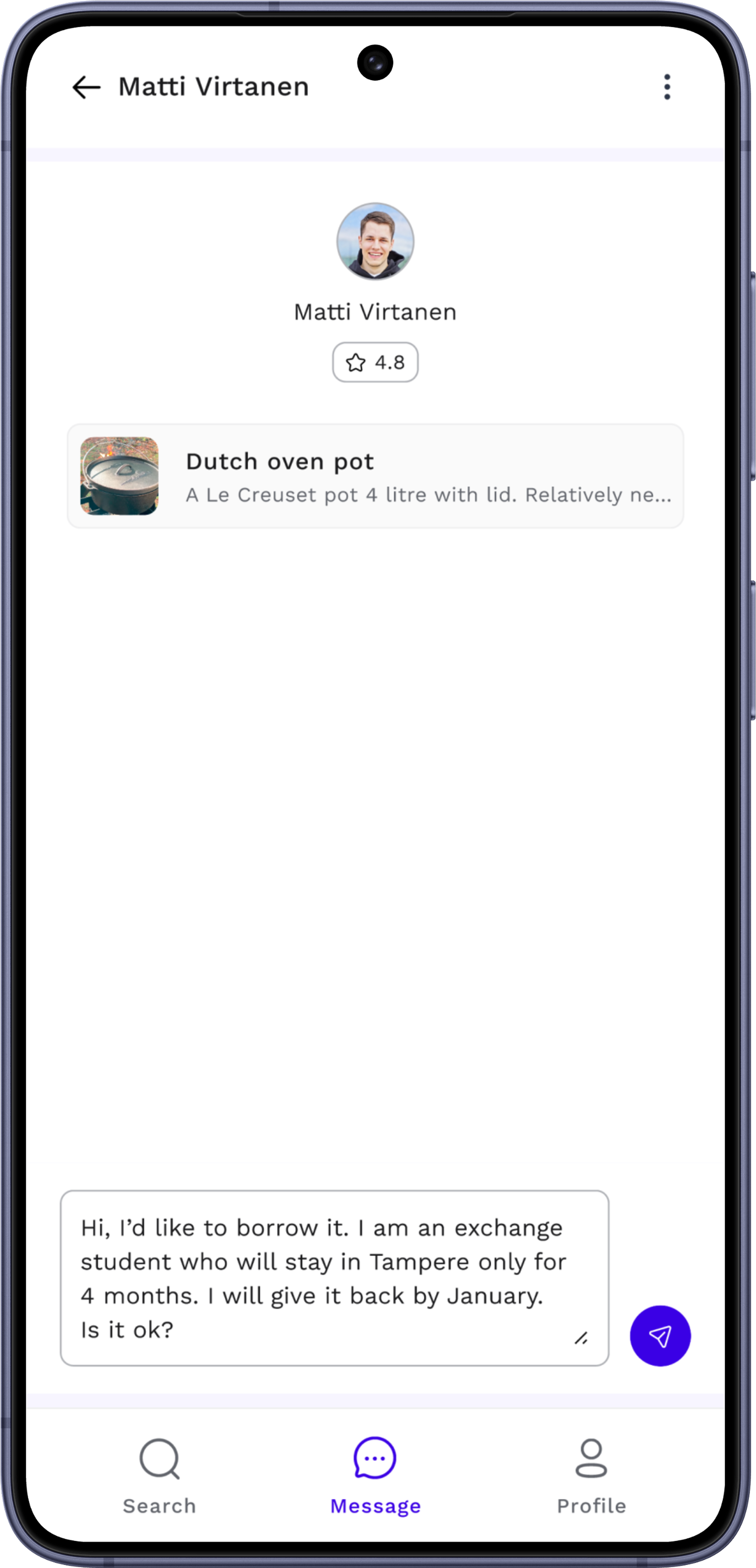
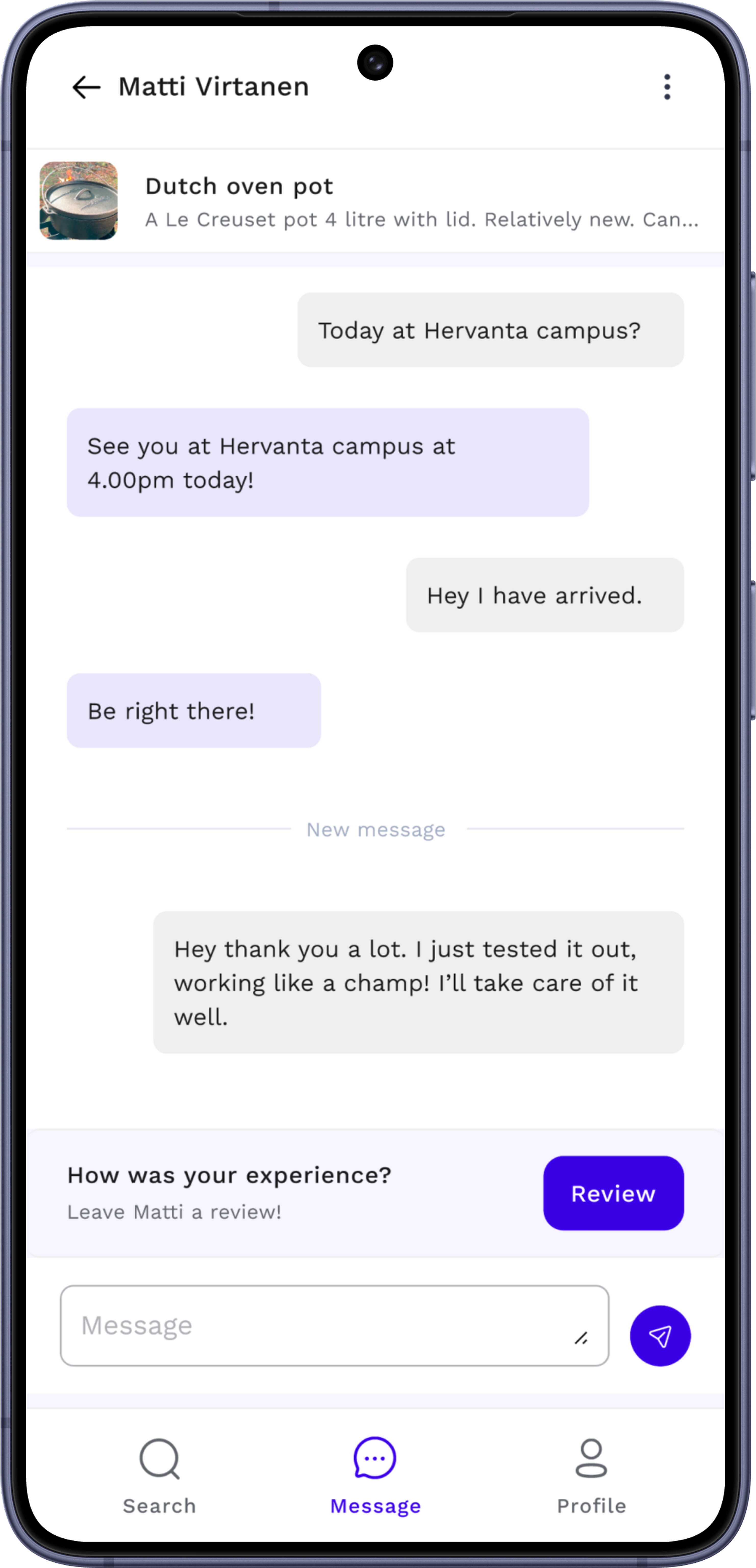
Students can sign in with their TUNI credentials, explore available items through categories and filters, review photos and condition details, check lender ratings and availability, and request a pickup through a streamlined flow.
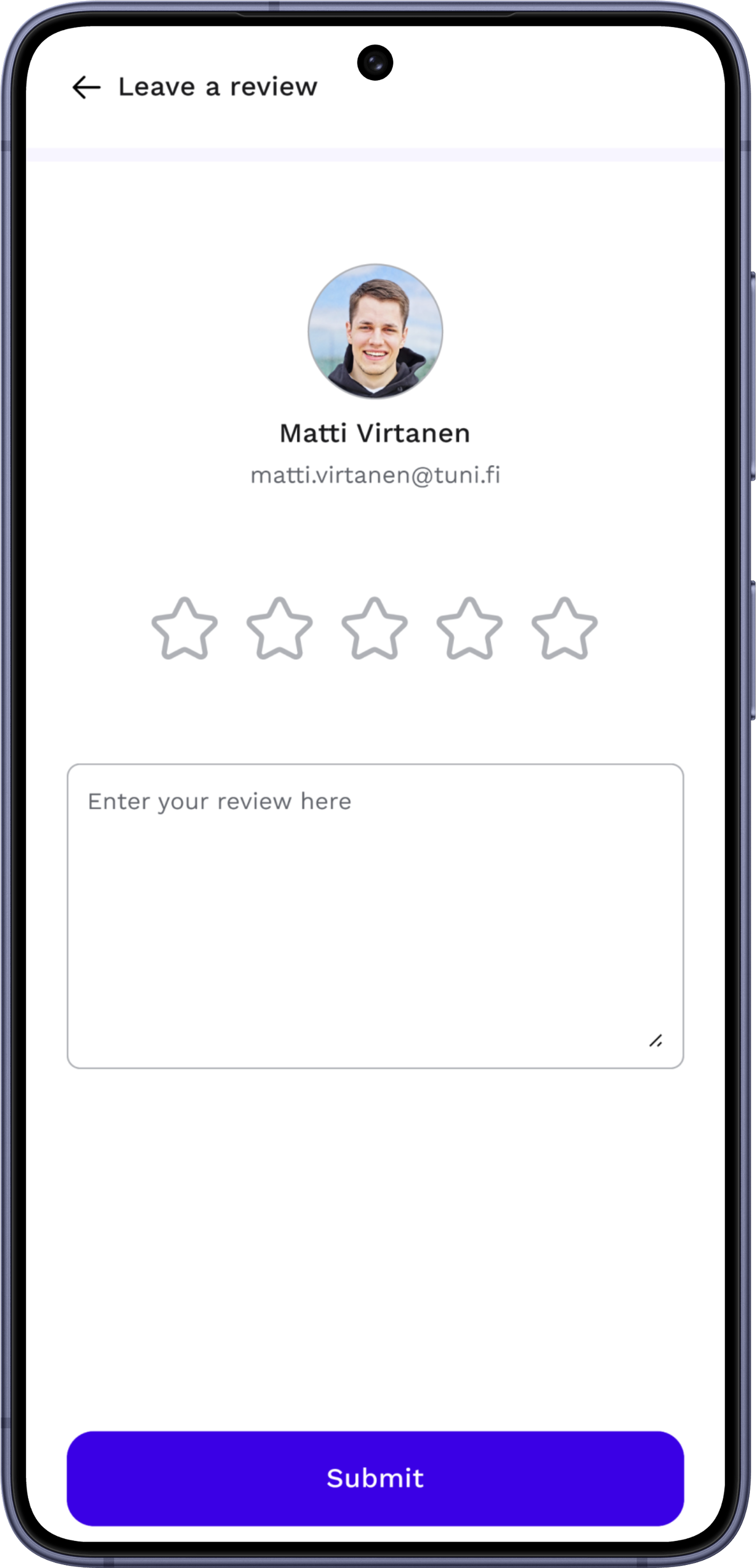
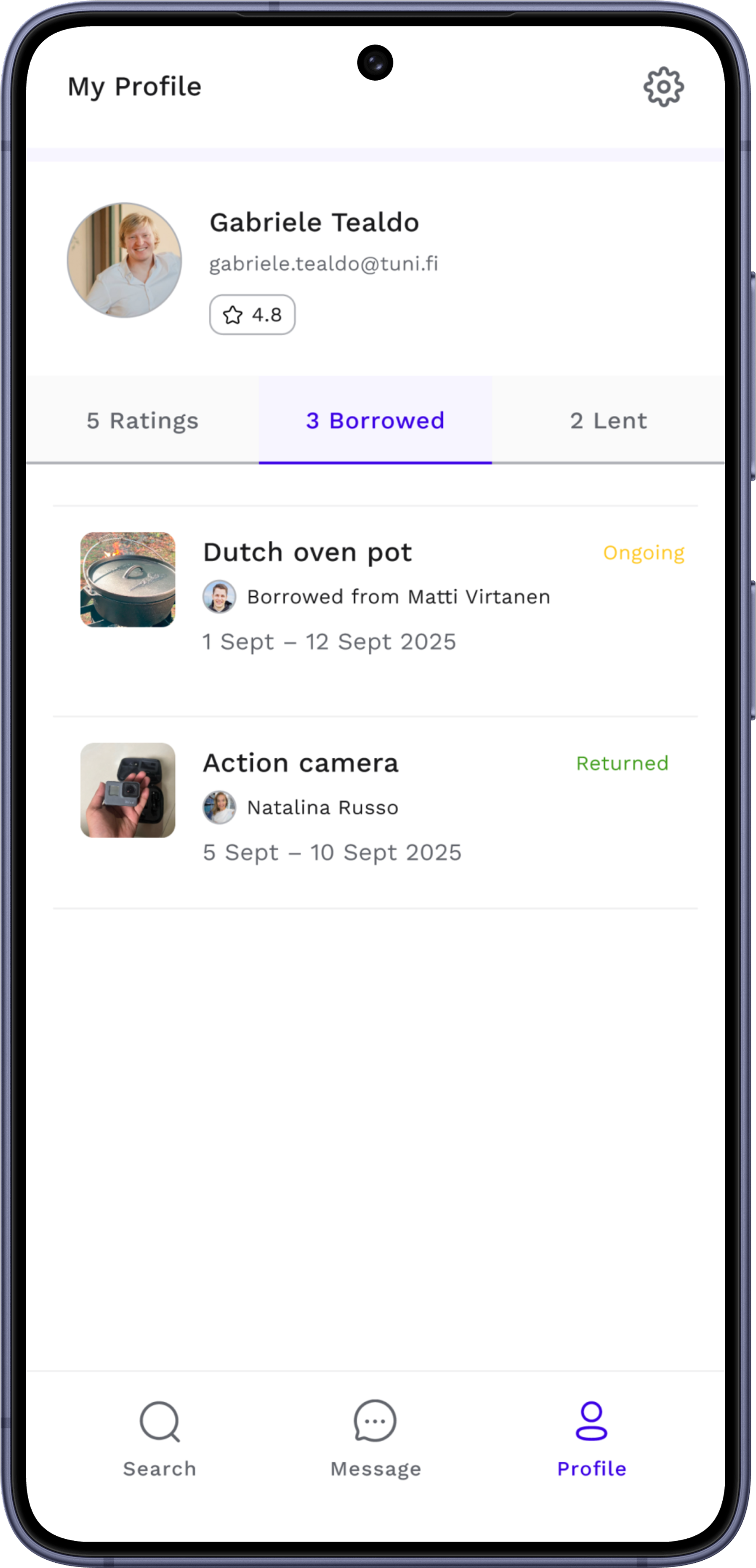
Reviews, deposits, transaction histories and condition reporting establish trust between students who may never have met. Lenders can publish available items and track their return, while borrowers can report anything dirty, damaged or defective. The result is a mobile-first service designed to make borrowing faster, safer and more convenient than existing informal channels.
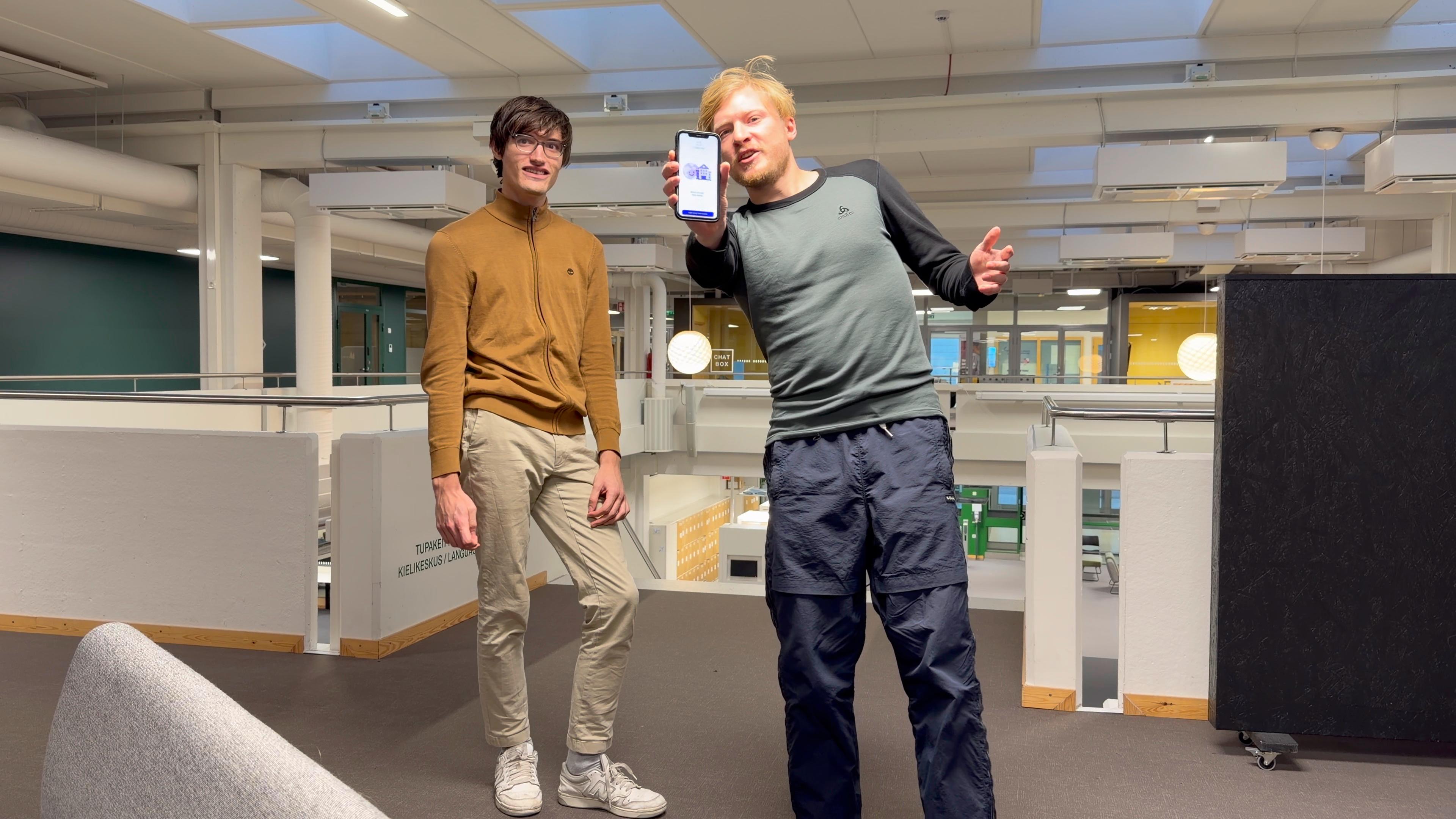
Watch the pitch
The outcome
Five student interviews became the foundation of a research-driven campus borrowing service.
Our thematic analysis translated participants’ needs, concerns and expectations into personas, user stories, experience goals, usability requirements, a conceptual model and a complete information architecture.
Every major product decision—from fast item discovery and TUNI authentication to reviews, deposits and transparent condition information—was grounded in the research. These insights became the foundation of an interactive prototype spanning mobile and desktop experiences.
The result is a service concept that demonstrates how human-centred design can make temporary student life more affordable, reduce unnecessary purchases and support a safer, more sustainable culture of sharing across the university community.
View the final report