The problem
74% of surveyed students struggle with today’s digital academic guidance resources.
In a survey of 183 University of Trento students, nearly three in four reported difficulties with the digital resources currently available to support academic decisions.
Information about what and where to study remains scattered across institutional websites, rankings, forums and disconnected platforms. Faced with inconsistent sources and difficult comparisons, students experience cognitive overload and choice paralysis when making one of the most consequential decisions of their lives.
View the deck
The solution
UniMate turns fragmented guidance into one trusted conversation.
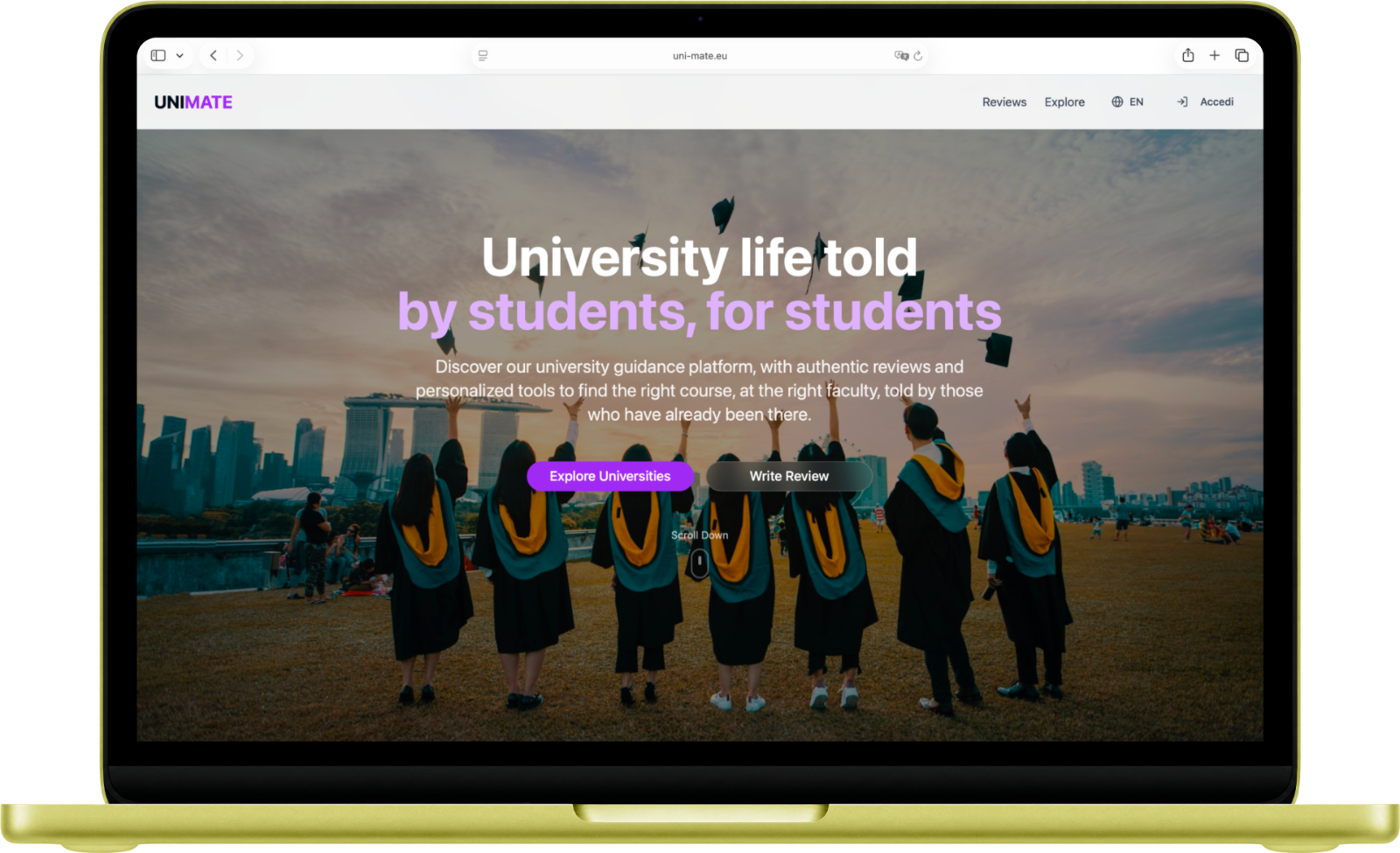
UniMate combines conversational AI, verified institutional information and authentic student reviews in a single experience, helping prospective students explore their options and make informed decisions with confidence.
Its Retrieval-Augmented Generation architecture grounds every response in trusted institutional data and structured student reviews, making its guidance transparent, traceable and source-backed.
The service has been validated through a peer-reviewed publication at CLiC-it 2025, a research collaboration with Tampere University and its selection as Global Winner of the European Commission’s DigiEduHack 2024.
We continued to build a strong relationship with DigiEduHack and the European Commission in Brussels. On 25 November 2025, I returned to Brussels to represent UniMate as a panelist at the DigiEduHack Main Stage Event 2025, where I shared the project’s progress and evolution since the competition.
Watch the panel
The outcome
UniMate was not simply designed for students. It was designed with them.
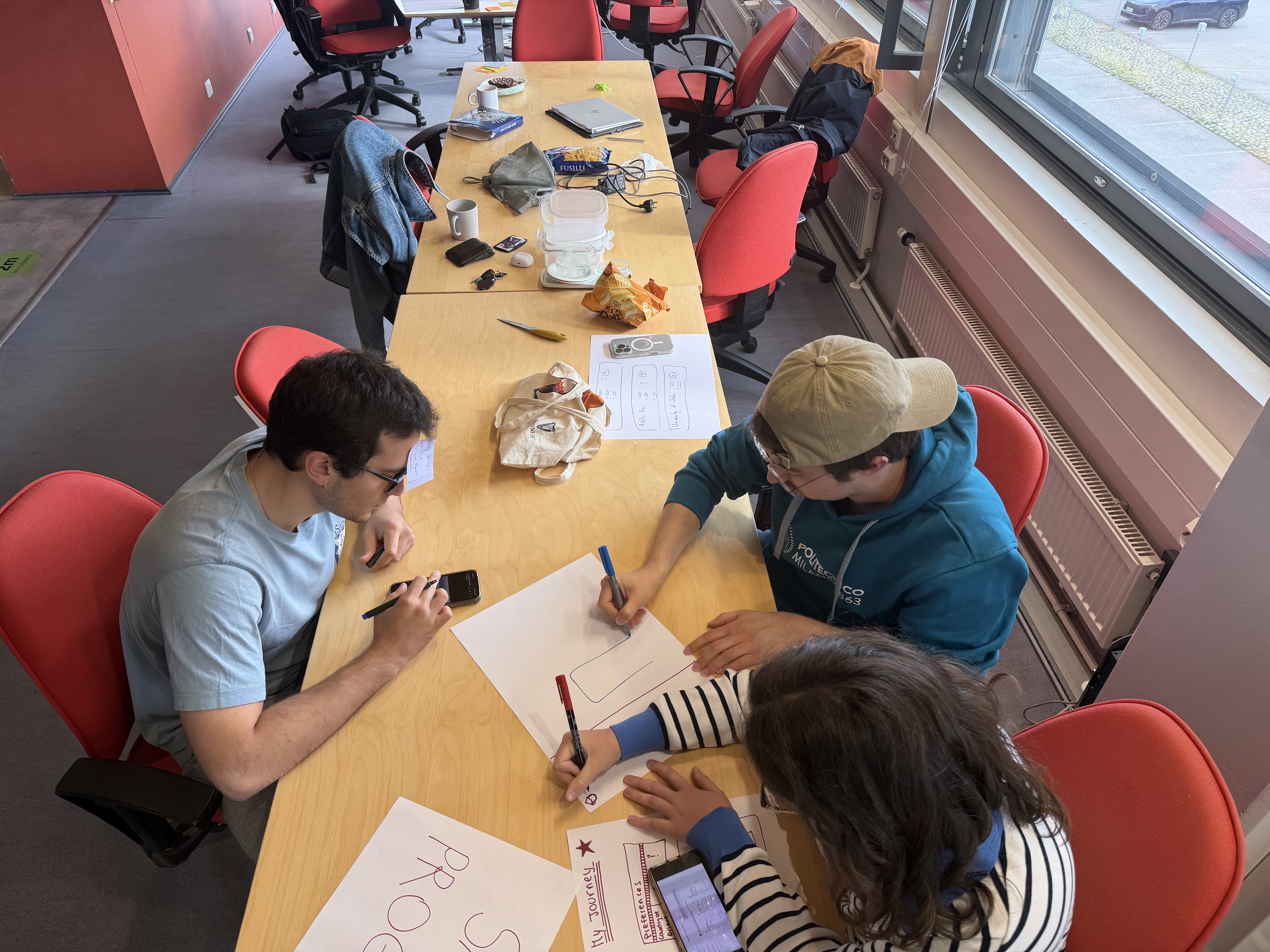
Supported by a research scholarship at Tampere University, I involved 22 international students in a participatory design workshop and a usability test. The sketches they created during the workshop became the design foundation for UniMate’s core conversational AI screens, directly shaping the chatbot’s structure, interface and interaction patterns.
This co-design process formed the basis of my Master’s graduation thesis, demonstrating how students’ lived experiences can be translated into more trustworthy, inclusive and human-centered AI-powered academic guidance.
The study is now being prepared for publication in a peer-reviewed scientific journal, extending the project’s contribution beyond the product and into the academic community.
Watch the thesis defense